Air Conditioning Installation London
F-Gas certified engineers for single split and multi-split air conditioning installation and repairs in London homes and flats. Clear surveys, fixed quotes, and neat residential work.




F-Gas certified engineers for single split and multi-split air conditioning installation and repairs in London homes and flats. Clear surveys, fixed quotes, and neat residential work.
5 out of 5 stars
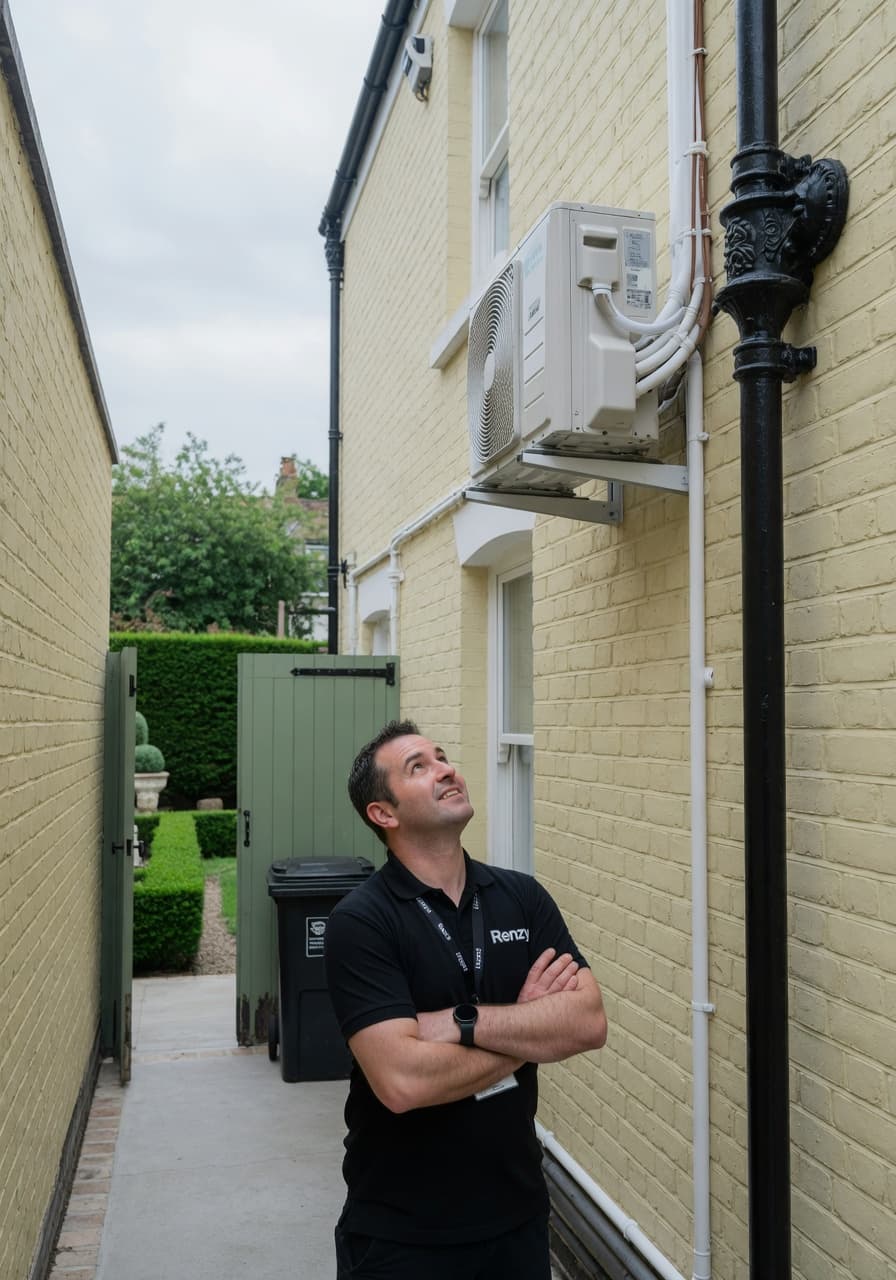
We'd been putting off getting air conditioning for years thinking it would be too disruptive. Renzy installed a Mitsubishi Air unit in a single day, with incredibly neat cabling.
A good install starts before anyone drills a wall. We plan the unit positions, pipe route, drainage, and power supply so the finished system looks tidy and performs properly.
We check the room sizes, insulation, sunlight, electrical access, and where the outdoor unit can sit without causing nuisance.
We mount the indoor and outdoor units, route the pipework, connect the electrics, and keep disruption to a minimum.
We test cooling, heating, drainage, and controls. Before leaving, we show you how to use the system and what maintenance it needs.
The right air conditioning setup depends on how many rooms you want to cool, where the outdoor unit can go, and how the pipework can be routed cleanly. Pipework means the insulated pipes that connect the indoor unit to the outdoor unit.
F-Gas certification is the legal qualification needed to work with the gas inside air conditioning systems. Your installation or repair is handled safely and documented properly.
We focus on domestic single split systems for one room and multi-split systems for several rooms connected to one outdoor unit.
Most single split installations are completed in a single day with the pipework neatly hidden where possible. We leave your home clean and your system tested and set up.
These are the two main choices for domestic air conditioning. The right option depends on how many rooms you want to cool, where the outdoor unit can go, and how neatly the pipes can be routed between the indoor and outdoor units.
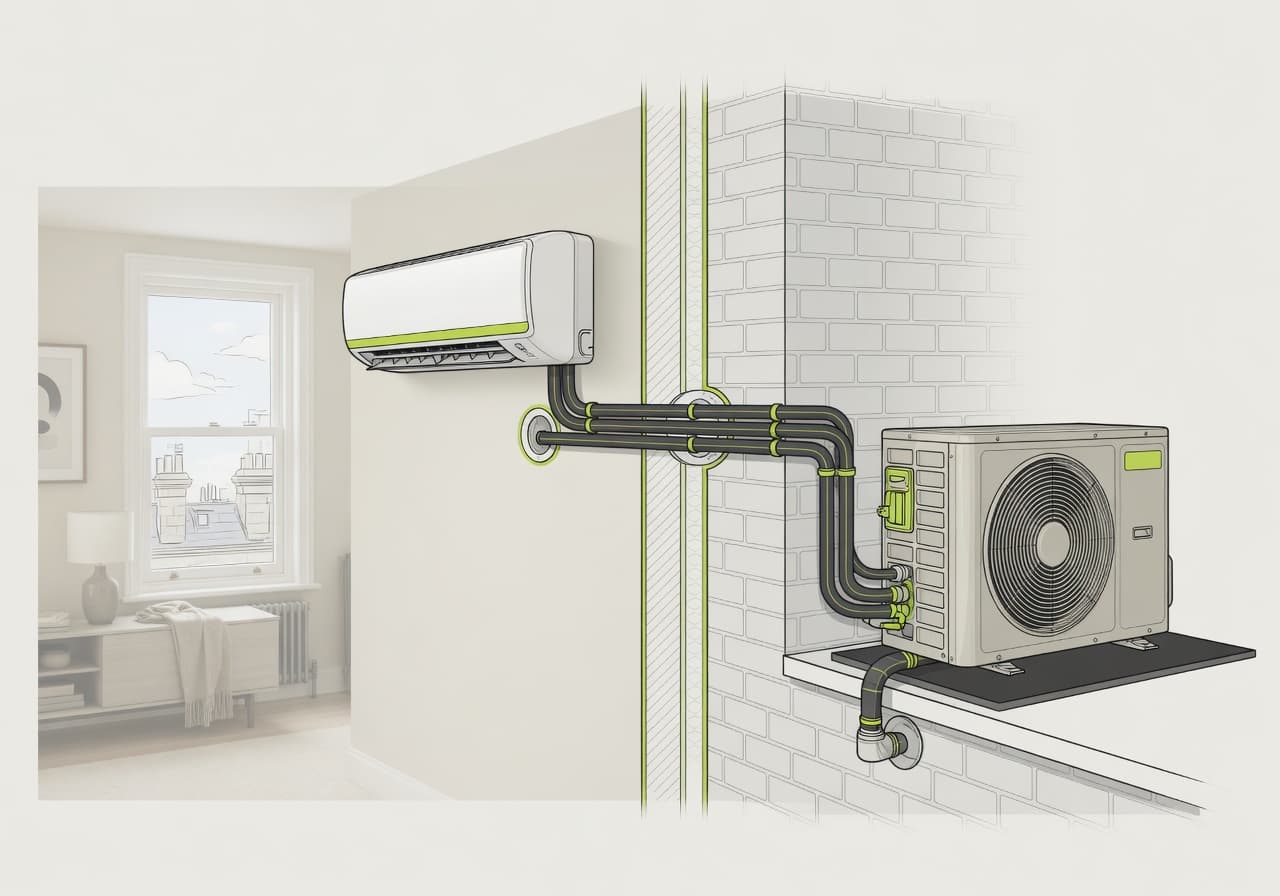
One room
A single split has one indoor unit connected to one outdoor unit. It is usually the cleanest choice when one room overheats, such as a bedroom, lounge, loft conversion, or garden room. The installation is usually simpler because the pipe route is shorter, and the room gets its own remote control and temperature setting.
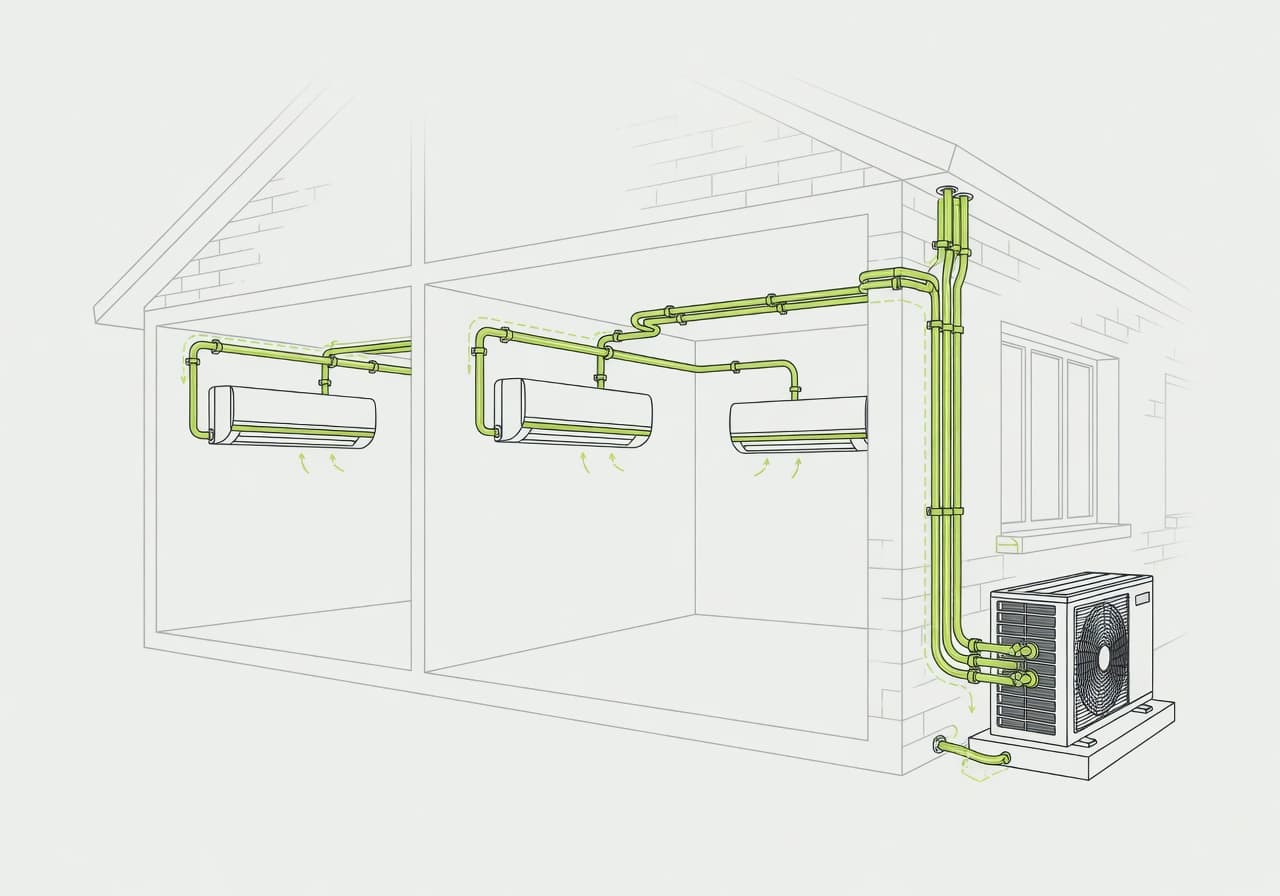
Two or more rooms
A multi-split connects two or more indoor units to one outdoor unit. It suits homes where several rooms need cooling, but you want to avoid multiple outdoor boxes. Each indoor unit can normally be controlled separately, so bedrooms and living spaces can be set to different temperatures.
Adjust the sliders to match your home. We use the UK typical electricity price and the average energy draw of a modern domestic air conditioning unit.
Estimated cost
£0.51
per day of use
Real usage depends on room size, insulation, sunlight, and target temperature. Based on the UK typical electricity price of 24.5p per unit.
Figures are illustrative only. Actual running costs will vary depending on your usage, tariff, and system efficiency.
Our F-Gas certified engineers install and service air conditioning across these London areas
Most single split installations are completed in a single day. A single split means one indoor unit connected to one outdoor unit. A standard back-to-back installation, where both units are on either side of the same wall, typically takes 4 to 6 hours. A multi-split installation for several rooms may take 1 to 3 days depending on the pipe route and number of indoor units.
In most cases, domestic air conditioning does not need planning permission. Exceptions can include listed buildings, conservation areas, flats with lease restrictions, or outdoor units that are visible from a public road. We check likely restrictions during the survey and can provide a clear written proposal for your freeholder or building manager.
We install leading domestic brands including Daikin, Mitsubishi Electric, Samsung, LG, Fujitsu, and Panasonic. We will explain the practical differences, such as noise levels, warranty, controls, and how tidy the indoor unit looks, then recommend a system that fits your rooms and budget.
Modern domestic split systems are efficient because they slow down once the room reaches the set temperature. A typical bedroom unit might cost around £1 to £2 per day when used for several hours, depending on your electricity tariff, room size, insulation, sunlight, and target temperature. Use the running cost calculator on this page for a quick estimate.
Yes, in many cases. For flats, we look for a sensible route for the insulated pipes between the indoor and outdoor units, plus a suitable place for the outdoor unit such as a balcony, roof terrace, or external wall. You may need written permission from your landlord, freeholder, or building manager. We can prepare a clear proposal to support that approval.
A single split system has one indoor unit and one outdoor unit. It is usually the best choice when you want to cool one room, such as a bedroom, living room, loft conversion, or garden room. The indoor unit is normally wall mounted, and the outdoor unit sits outside on a wall bracket, balcony, flat roof, or suitable ground position.
A multi-split system connects two or more indoor units to one outdoor unit. It is useful when you want air conditioning in several rooms but want fewer outdoor units on the outside of the property. Each room can usually be controlled separately, so one bedroom can be cooler than another.
Choose a single split if you only need one room cooled. Choose a multi-split if you want several rooms cooled and have a good route for the pipes from each indoor unit back to one outdoor unit. Multi-split systems can look tidier outside, but the installation is usually more complex. We will compare both options during the survey.
Yes, we repair domestic single split and multi-split air conditioning systems. Common issues include weak cooling, water leaking from the indoor unit, unusual noise, bad smells, blocked drains, dirty filters, sensor faults, and fault codes on the controller.
Common causes include blocked filters, dirty internal parts that the air passes through, poor airflow, an undersized unit, incorrect settings, a drainage issue, or a refrigerant problem. Refrigerant is the gas inside the system that moves heat from indoors to outdoors. Only an F-Gas certified engineer should work on that sealed part of the system.
The outdoor unit can often go on an external wall bracket, flat roof, balcony, side return, lightwell, or suitable ground position. It needs airflow around it, a secure fixing, and a location that will not create noise or access problems. We check this during the survey before recommending a system.
Modern indoor units are usually quiet on low fan speeds, often quiet enough for bedrooms. Outdoor units make more noise than indoor units, so placement matters. During the survey, we consider neighbouring windows, balconies, and shared walls so the system is comfortable for you and considerate for nearby properties.
Yes. Domestic air conditioning should usually be serviced once a year, or more often if it is used heavily. Servicing includes cleaning filters, checking drainage, testing performance, checking for obvious leaks, and making sure the system is running safely and efficiently.
Yes, many domestic air conditioning units can also heat. They work as an air source heat pump, which means they move heat rather than creating it directly like an electric heater. This can make them an efficient way to warm a bedroom, loft room, or study.
It can make a home more attractive, especially for loft rooms, bedrooms that overheat, and modern flats with large windows. The value depends on how neatly the system is installed, how quiet it is, and whether the outdoor unit position is sensible. A poor installation can have the opposite effect, so planning matters.